BLOG
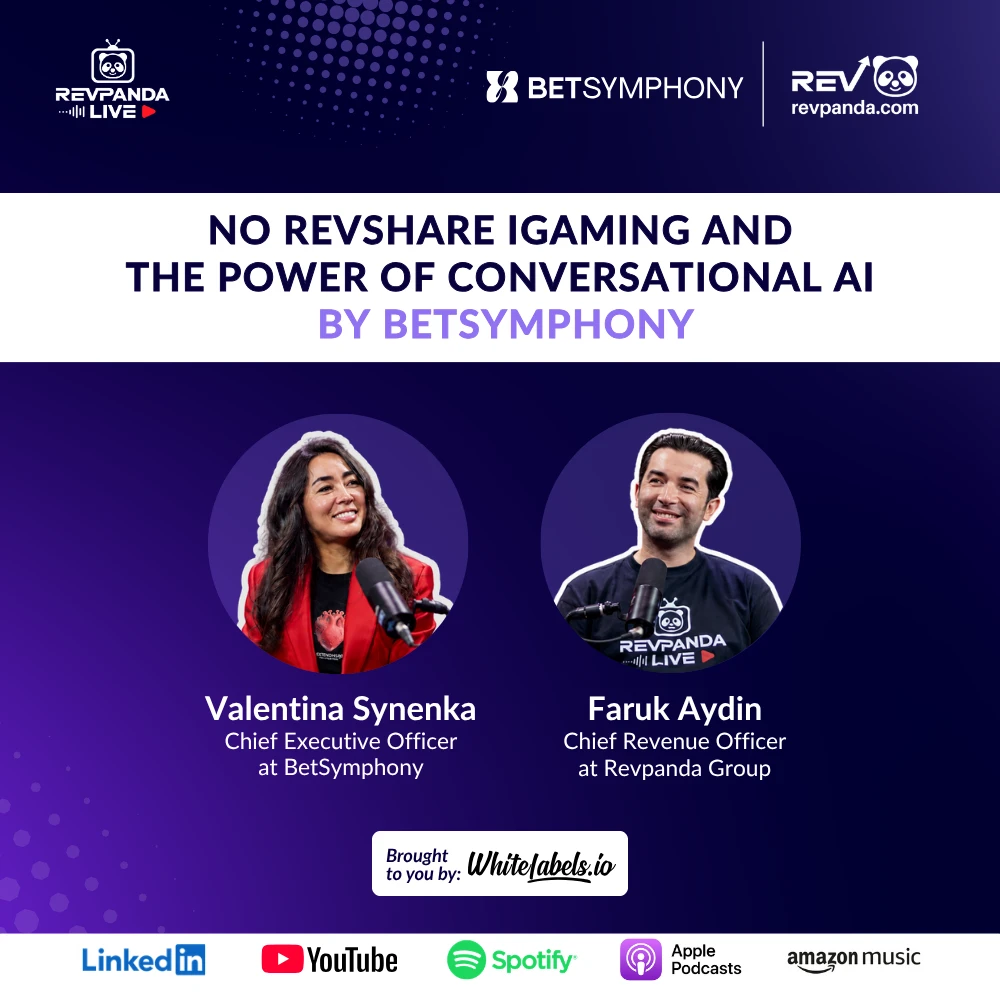
How AI Is Changing iGaming: Valentina Sinenko on the Future of Player Experience





Table of contents
Click on a title to jump to a section
Valentina on Change, Crisis and Success in iGaming
Valentina, who says her entrance into iGaming was completely accidental, studied art and fashion before going into IT over 15 years ago, then started and ran a software development company with her husband that spanned various industries before launching into iGaming. She attributes BetSymphony’s current success to being able to “deliver in crisis situations,” which Faruk links with the industry itself. The conclusion from the beginning of the interview is straightforward and clear: the iGaming industry is constantly evolving, with regular changes to regulation, markets, technology and player demands, which requires stakeholders to remain flexible and agile.
BetSymphony’s Three-Layer Approach to iGaming Technology
When asked about BetSymphony, Valentina characterizes the sportsbook solution provider and turnkey casino product as a new platform built on many years of experience and expertise. Describing BetSymphony as “a solid, good-performing platform with all the must-haves,” Valentina distills it into three parts: a strong base layer (a full-featured platform as the baseline), an AI conversational layer (built on work the team had done previously with AI), and a new business model.
Put simply, BetSymphony is a white label, operator-owned B2B sportsbook and casino platform (source code included) as compared to traditional platforms operating on a revenue share basis. The conversational layer, BetHarmony, allows players to discover games to play at the leading online casinos, place bets on sportsbooks, and manage their accounts through chat or voice rather than navigating menus.
No Revenue-Share Approach to iGaming
Valentina indicates that operators have long been expressing complaints about platform providers, most commonly citing high revenue shares and slow time-to-market for requested features. BetSymphony tackles that second issue with a no revenue-share model: operators are able to take the source code and have full ownership of the platform. When Faruk asks whether having this flexible ownership model was part of the product from the start, or whether it was an outgrowth of other issues she saw developing in the market, Valentina points to the latter: even if such platforms existed, getting changes made can still take up to a couple of months, and after your request is fulfilled, it likely goes to another client as well, hampering your ability to differentiate.
Valentina is careful to note that ownership, especially that of a newly launched online casino or sportsbook, comes with responsibility, and that BetSymphony pairs source code delivery with training, transfer support, and even co-running the platform where an operator’s in-house team requires assistance.
The Rise of Conversational Interfaces
BetSymphony, which first launched in Africa, was developed to respond to the changing needs of the industry, especially those introduced with the widespread use of Artificial Intelligence (AI). Valentina positions the product, which comprises several modules such as front end, back end, mobile apps, a data warehouse, and BetHarmony, its AI conversational layer for players, within the wider context of how she thinks the industry is about to change: “Sportsbooks have always looked almost the same. Nothing has really changed apart from colours and buttons. But it’s about time. I think interfaces are going to shift with the evolution of AI.”
BetHarmony, the conversational multi-agent solution integrated into BetSymphony, is a direct reflection of the ongoing shift toward AI-driven, conversational interfaces reshaping how players interact with iGaming platforms. The product’s front end is yet another example of current dynamics: it has been optimized for users who prefer mobile-first casinos and sportsbooks.
The wider iGaming industry is moving away from competing on games catalogues and market footprint, moving towards how seamlessly players can interact with a brand. Faruk follows up by asking if this means we’ll see the traditional interfaces be completely replaced by conversational capability, to which Valentina responds that it will be a gradual change. Operators will have both traditional and interactive modes available simultaneously while users adapt in their own time. This will allow them to ask for a betting suggestion or see how a team did without ever leaving the conversation. She then links this shift to the industry’s wider focus on retention versus acquisition: attracting new users has become more challenging than ever, which means evolving UX is less of a choice.
Where AI Is Actually Delivering Value
AI is the natural focal point of the discussion. The two discuss the importance of distinguishing actual AI capability from AI marketing language, at which point Valentina notes that AI is a mere buzzword for most companies. She attributes part of it to costs and part of it to the effort it takes to build real capability. However, she predicts that the pressure to actually develop meaningful AI-assisted tools will become inevitable across the industry. A case in point is BetHarmony: Valentina stresses that it is a direct response to a user experience gap that solves an actual problem with the help of AI.
When Faruk asks where she sees the most practical value realized so far, Valentina highlights customer support as the most obvious early win, noting that “up to 50 to 70% of customer support tickets can be successfully resolved with AI, with only the more complex work transferred to human agents.” She also highlights accelerated development, prototyping, and personalization, which she describes as a long-term goal for the industry that has finally become achievable. At this stage, Valentina shares the insight that games, including online slots, will be generated on demand based on player preferences. With greater options comes greater responsibility. Valentina is careful to stress the importance of governance: as AI capability expands, so does the need for proper guardrails.
Adapting to the Next Era of iGaming
Discussing what’s next, Valentina describes how operators can embrace the technology, either by taking on BetSymphony as a whole, or by implementing BetHarmony as a plug-and-play layer on top of their current stack once they’ve run through a discovery process to determine the integration’s scope. She also hints at an upcoming turnkey option for operators who want to bet on the company but aren’t yet ready to assume direct source code ownership, which will be positioned as a middle step toward that goal.
All in all, the interview paints a picture of an industry amid major change, with ownership structures, UI/UX and player interaction all being influenced by AI in tandem, and only those operators who act on early adaptation standing to benefit.
Listen to the Interview
Stay Ahead of What’s Next in iGaming with Revpanda
For more perspectives and developments from across the iGaming industry, visit our news page.